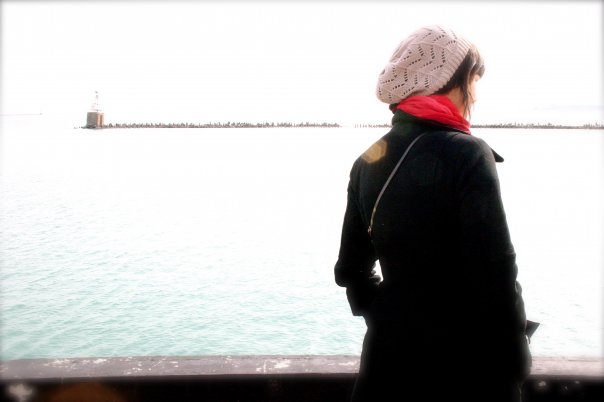
skip to main |
skip to sidebar
 The main courtyard of Topkapi Palace
Istanbul has a very different history of open spaces from most western European and North American cities. While the street life is arguably livelier, there are little truly public open spaces in the city. Whether due to a history of religious conflict or simply a cultural way of life, green space is spare and in many areas of the city trees are hard to be found. Many of the green spaces in the city (such as the Topkapi Palace gardens) were long restricted to common people and reserved for the elite.
 A pavillion on the Hippodrome
The Hippodrome is one of the earliest public spaces which still remains a strong landmark in use today. Constructed when the city was still named Byzantium, it was the central destination for horse and chariot races through Constantinople's reign and the entire Byzantine period before it was neglected by the Ottomans. Given that these spaces are now used more by tourists than locals, are they still true public space in the sense that public spaces are for the publicus /people?
Pictures from Istanbul (finally)!
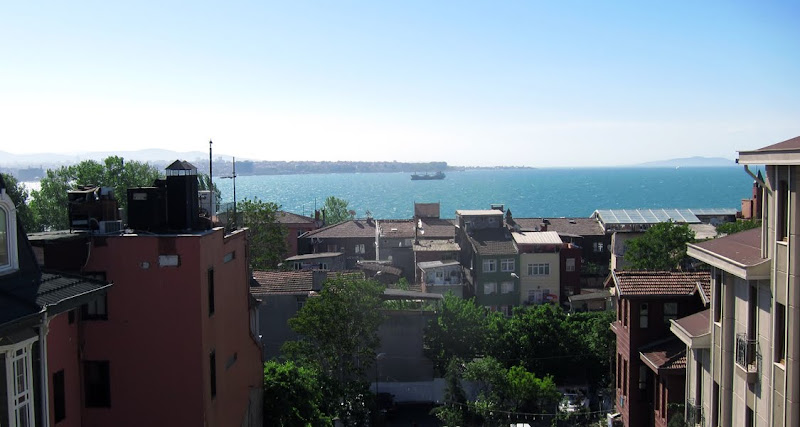 Overlooking the Bospherous from Sultanahmet.
We stayed in the old town, Sultanahmet, where the Haggia Sophia, Blue Mosque and lots of tourists are. I'm sure most people stay here in Istanbul their first time, as it is probably where 80% of hostels and hotels are located.
 Houses in Sultanahmet
While beautiful, not many people actually live in the area, which has mostly been given over to awful restaurants and overpriced shops catering to tourists. Interestingly, the surrounding neighbourhoods are some of the more conservative in Istanbul. There was certainly some contrast... from 4 star hotels of the lavishly (and sometimes scantily) clad middle aged foreign to the mostly headscarfed population and leering men in run down shops. This was all that we saw of the "east meets west" that Istanbul is known for during our first few days.
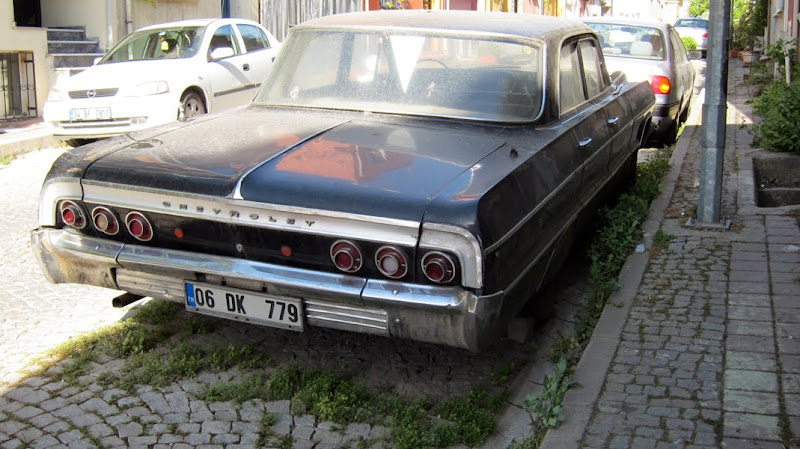 Some left-over retro
Most of the food in our first few days was pretty awful (think dry and greasy shawarma stuffed with french fries - do NOT eat in Sultanahmet), but it wasn't until we had the advice of a local via friend-of-a-friend that we were steered in the right direction. Still, we were running out of money and mostly enjoyed food from stalls and markets (Turkey has the best tomatoes I have ever tasted).
 A success in our string of hit-and-miss street food encounters.
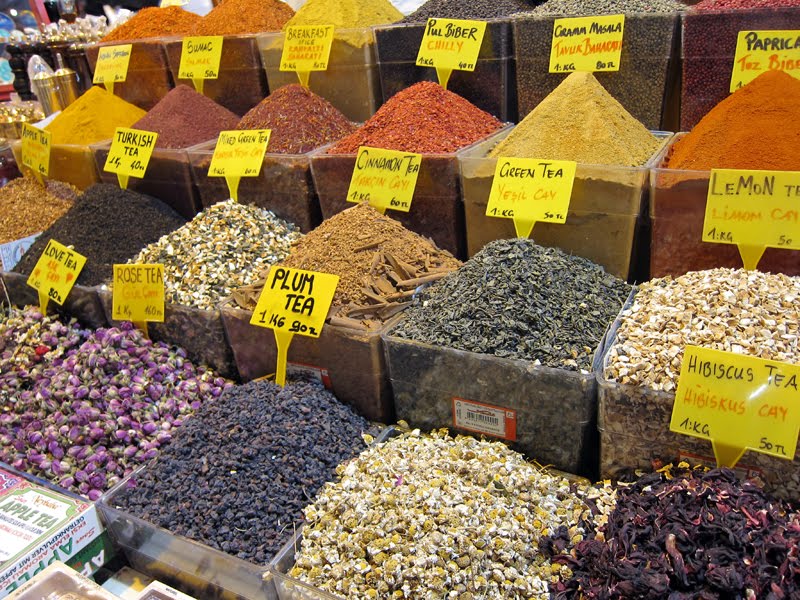 The spice bazaar.
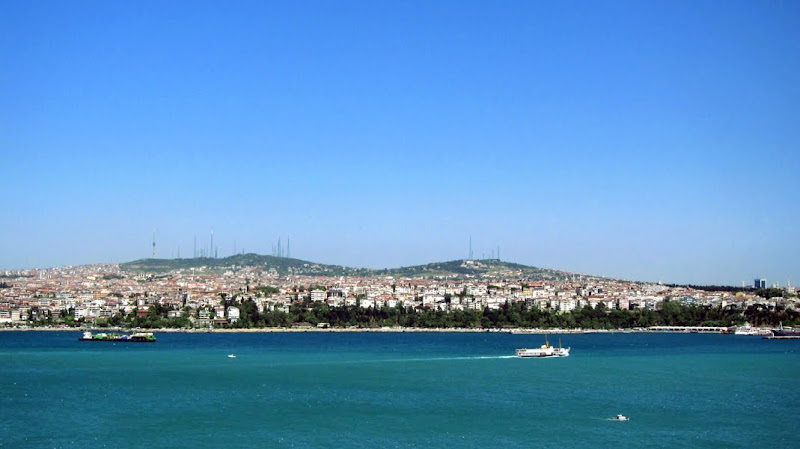 Looking over at Asia
It wasn't until our last day that we finally left the European side. We got to travel on one of the city's ancient municipal sea buses (highly recommended instead of a Bospherous cruise). They were not pretty and certainly not the best place to draw attention to yourself as a tourist, but they kind of reminded me of the ferries at home.
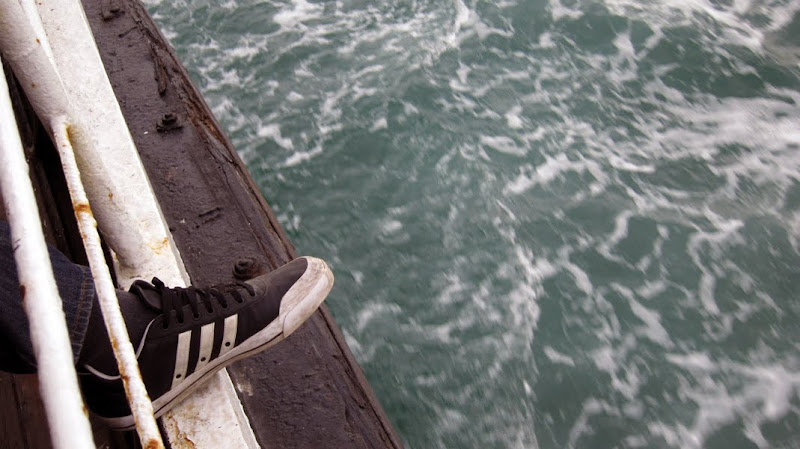 Crossing the Bospherous on one of the city's ancient sea buses
You can be served a drink if you flag down one of the uniformed servers and grab a nice seat outside. The boat has three levels and rocks like one giant floating bathtub - even more violently when you stop. At your stop, there is a gap ranging from 20cm to sometimes a whole meter wide between the boat and land. If you are an old lady you can walk across one of the shifting rickity boards used as bridges, but if you are most people you will jump the gap.
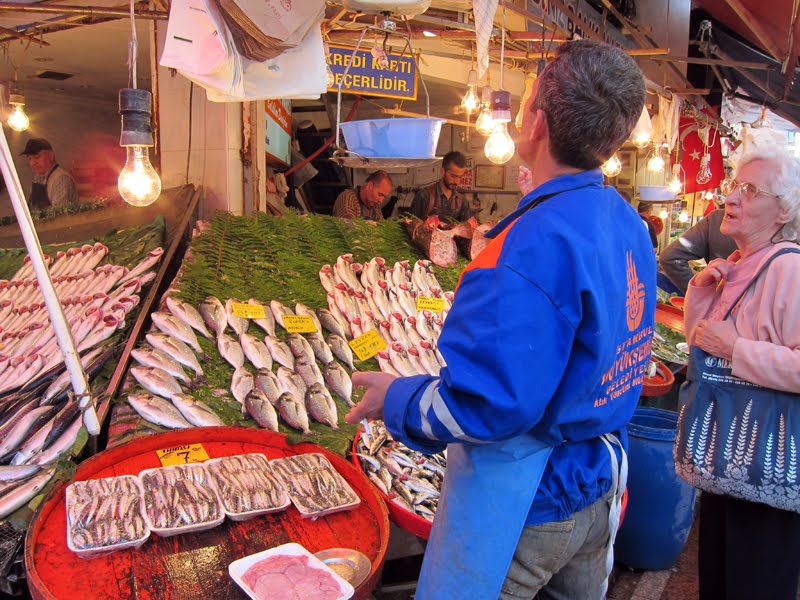 A fish stall on the Asian side.
A seaside neighbourhood we wandered in on the Asian side was filled with young liberal students. Lots of market life and a strong café culture. For once no one paid us any attention - a nice change.


 Despite the crowds and total lack of ambience, it still took my breath away after many years of anticipation.

 The main courtyard of Topkapi Palace
 A pavillion on the Hippodrome
 On our last day we went to a neighbourhood on the Asian side called Kadikoy (just googled it). We wandered for a while along the beach area called Moda, which I think is a very beautiful name.
 The beach is not actually a beach and consists mostly of giant boulders piled by the seaside. The people wandering it were mostly students or young upper-middle class couples but there were still lots of fishermen finishing off their day.
 There were lots of couples at Moda and women selling flowers to give to your lover.
 We really dreaded leaving the real world and going back across the water to Sultanahmet...
  Overlooking the Bospherous from Sultanahmet.
 Houses in Sultanahmet
 Some left-over retro
 A success in our string of hit-and-miss street food encounters.
 The spice bazaar.
  Looking over at Asia
 Crossing the Bospherous on one of the city's ancient sea buses
 A fish stall on the Asian side.